


Only one place in China made it to this year's best places to visit in 2017 list from the New York Times. In past years, several China destinations have been on the lists.
Sanya, an island resort in South China, is known as the Hawaii of China. Located on Hainan Island, it's got tropical weather and super beaches. CNN singled out the many luxe resorts as one reason to visit. It was No. 20 on the list.
As usual, luxury accommodations rate high as reasons to visit the newspaper's list of top destinations. newspaper's annual list of best places to visit.
Other dstinations inAsia that made the list were in Japan, South Korea, Thailand and Nepal.
Showing posts with label China tourism. Show all posts
Showing posts with label China tourism. Show all posts
Tuesday, January 10, 2017


Thursday, July 28, 2016
Pingyao a top destination with European visitors
 |
| Pingyao in 1997 |
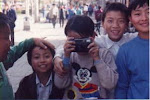
This walled Ming Dynasty city in Shanxi Province was one of my favorites when I lived in Beijing. Oh, how it's changed since then. A picture accompanying the article showed the street filled with people., and foreigners so rare that a couple of toddlers ran away screaming when they saw me. One little boy was more adventurous and shyly followed me around and a couple of times acted as my "translator", even though he had no English. He did keep his Chinese simple enough that I could understand it, especially the lecture from an elderly gentleman about being a single foreign woman traveling alone in China.
Back when I visited, Pingyao was just beginning to be discovered as a tourist destination. The streets were dirt, and I enjoyed wandering through them, looking at the old buildings. I then climbed to the top of the wall, walking around it and viewing the city below.
Pingyao is considered the best preserved walled city in China. Many movies, including Raise the Red Lantern, and television shows have been filmed here.
There weren't many surprises on the top 10 list, just the normal tourist destinations, such as Beijing, Shanghai nd Xi'an.
Wednesday, July 13, 2016
Shanghai, Hong Kong: top places to visit in Asia
 |
| Shanghai's Nanjing Street at night |
They are Shanghai, No. 2, and Hong Kong, No. 5, both major international cities drawing millions of tourists each year.
Shanghai is the financial capital of China and the country's largest city. It made the list because the first Disney resort in China opened there in June 2016. This metropolis is a bustling city on the Haungpu Rive, so a walk along the Bund is a prime activity for visitors. Shanghai also has some of the most innovative architecture I've ever seen. It's particularly spectacular at night if you're taking a river cruise.
Hong Kong is famous for Victoria Peak and the Star Ferry, but the guidebook publisher picked it because of its great parks in the outlying areas. The former British colony reverted to Chinese ownership in 1997.
Sunday, January 10, 2016
China gets two spots on NYT's annual travel list
 |
| Traditional Chinese tiled roofs |
Hangzhou, home of the very scenic West Lake that inspired painters and poets, made the list for a number of reasons. including its booming economy. The city is home to several e0commerce biggies, such as Alibaba. More importantly, it is the first city in China to host a G20 summit. The city is adding new hotels and museums. One, the Folk Art Museum, is built on a former tea plantation. It features thousands of traditionally-styled roof tiles,as shown in the Times' accompanying photograph. Hangzhou ranked 16th on the newspaper's annual list.
Guizhou Province is just now being discovered by tourists, according to the Times, which notes a new high-speed train from Guangzhou reduced travel time from 20 hours to four. But it's a place that I fell in love with when I visited it 20 years ago. A visit to a minority village is a must; the Miao one I went to in the mountains was in the middle of rice harvest. (The photo of rice fields the Times used is stunning.) The village was rustic, set on hillsides. While there, I watched a man bath a water buffalo in a creek, which also served as a source of drinking water for the village. It's No. 44 on the list, but had I been making the choice, I would have put it much higher.
Wednesday, October 16, 2013
Li River: a good one for travelers
The Li River, in South China, ranks as one of the 15 best rivers in the world to travel on.
The river, which links the towns of Guilin and Yangshuo, ranked No. 14. The Amazon River was No. 1, while Russia's Volga River was No. 15, according to the CNN article. Many tourists like to ride a bamboo raft between the two, viewing stunning karst formations along the way. Others like to bike along the river.
China's most famous river is the Yangtze, closely followed by the Yellow River, but the Li River is becoming more well known all the time.
CNN made the ranking based on nature and wildlife, scenic beauty, culture, adventure and activity options, such as rafting and biking.
Are you going to China?
If you're planning a trip to China, check Cheryl's China, my website about travel in China for tips and suggestions. Feel free to email me if you have any questions about travel in China.
Saturday, June 8, 2013
Travel tips contest winner!
 |
| Beijing's Forbidden City |
One way solo traveler Aleah handles this is to take a picture of her hotel to show taxi drivers when she's ready to return home after a day of sightseeing. Her tip was deemed the most helpful for first-time travelers to China by the panel of judges in last month's travel tips contest. Aleah wins a walking tour of Imperial Beijing on CD and a PDF copy of my best-selling China Travel Tips ebook.
An alternative to searching for the hotel photo is to carry the hotel's business card with you. One side is in English, the other side in Chinese. The Chinese side frequently includes a small map.
Honorable mention goes to Jean Ash, who offered several tips, one of which I'd wished I known when I was traveling in South China many years ago. Jean says to make sure you have plenty of yuan (Chinese money) before heading out to smaller cities. While these places normally won't be as expensive as Beijing or Shanghai, you may not be able to find ATMs that take foreign cards or banks that will change your money. I remember needing money in a small (one million people being small for China!) on Sunday. Banks were open, but as I was told, they only accept money on Sundays, not give it out, which they would be doing in an exchange. I finally ended up going to a major hotel and lying about being a guest there so I could change money.
Are you going to China?
If a trip to China is in your travel plans, please visit my website, Cheryl's China, for tips and recommendations, or email me if you have any questions.
Sunday, November 18, 2012
Website changes
 When I was a writer for Suite101, I wrote dozens of articles about China, frequently mentioning them on this blog with a link to the Suite site.
I no longer write for Suite and, at my request, the company deleted all my articles. The information contained in those articles is too good to just toss out, so I am gradually adding the ones on China to my website, Cheryl's China.
If you haven't checked my website out lately, please check back again...again...and again. Adding this content, plus other pages I'm working on at the same time, is a never-ending process. Right now, I'm updating once a week.
I've also added a Twitter feed to the home page. I tweet mainly about China, particularly interesting places to visit and news articles that I find interesting. Readers are always welcome to follow me @cherylprobst, but if you're following a lot of people, my China tweets could get lost in the shuffle. But they're all in one spot on my website.
Sunday, March 25, 2012
Slide shows on China
 |
| Opening slide on Buddhist cave art |
One of the things I like about my new Cheryl's China website is the ability to easily add slide shows. So far, I've done one on sites I've visited on the Great Wall of China and another on snack foods that can be found at the Wangfujing night food market in Beijing.
I'm working on another right now called Buddhist cave art. It's primarily about the Longmen Grottoes in Luoyang, but does have a few photos of Thousand Buddha Hill outside of Jinan which I visited on my first trip to China in 1984.
Buddhist cave art is fascinating, with carvings of statues ranging from a couple of inches tall to tens of feet high. Cave art may be a slight misnomer as the unique statues are carved into a hillside in such a manner they look like they are in caves. Cave art flourished in the 5th and 6th centuries. Much of the cave art is deteriorating from being exposed to the elements for so long, but what remains is quite impressive and worth a visit.
While Thousand Buddha Hill has only a thousand Buddhas carved into a hillside, Longmen has more than 100,000 statues of Buddha and his disciples. It is a particularly scenic setting alongside the Yi River about nine kilometers from central Luoyang.
More slide shows are on the drawing board, so check my website frequently. I have around 25,000 photos of China, so I've got a lot to choose from.
Are you going to China?
Sunday, May 15, 2011
Peking Duck: Yum!
 |
| Carving Peking duck |
Peking duck is my very favorite Chinese food; I like it even better than gongbaojiding (chicken in spicy peanut sauce, sometimes called kung pao chicken in the United States.)
I took a cooking class in Beijing where I learned to make gongbaojiding, but Peking duck isn't on the instructor's menus. Of course, if I learned to make it, I would make it all the time and grow tired of it.
At my insistence, we usually eat Peking duck at least two or three times when we return to China for visits. If you have cholesterol problems, you probably shouldn't eat Peking duck as it is very greasy, both the meat and the crunchy skin. But it is just too uberdelicious to worry about that.
Most restaurants will carve the duck at your table. This is fun to watch. These days the carvers wear those thin plastic throw-away gloves when they carve. I know this is a more sanitary way to carve the duck, but somehow it just doesn't have the same atmosphere. Oh well, it doesn't affect the taste of the duck . . .
Peking duck is known as kao ya or roast duck in Beijing. If you're in Beijing and want to sample Peking duck, just look for restaurants which have a huge plastic duck outside the entrance. Quanjude is premier Beijing's Peking duck chain, but the duck is just as good at other restaurants.
If you're planning a trip to China, especially Beijing, please visit my website for helpful information. Feel free to email me with any questions you might have.
Saturday, April 16, 2011
A visit to Qingdao
When I worked at China Daily in the mid '90s, there were two work weeks: Monday through Friday and Sunday through Thursday, and everyone workd both of them. While it was no fun swtching from M-F to S-Th because you only got one day off, it was worth it because when we switched from S-Th to M-F, it meant we got a three-day weekend. I developed the habit of catching an overnight train after work on Thursdays to somewhere, coming back on the overnight train Sunday, showering and then heading to work on Monday.
One long weekend, I chose to visit Qingdao on the East China coast. It was almost like a quickie trip to Europe. At one time, Qingdao was a concession of Germany, and the architecture reflected this. Off the main drags, you could find narrow cobblestone streets and German styled gardens. Even the local beer, Tsing Tsao, was based on German brewing methods.
I don't recall that I ate any German food that weekend. I ate very little, as a matter of fact. In my wanderings, I came across a food stand where I was about to order something, when I felt something brush my feet. I looked down. It was a rat the size of a fat house cat. It wasn't afraid of people, so I'm assuming the food vendor must have fed it leftovers. There went my appetite. Later that day, I stumbled across the local food market, where buckets of live scorpions and snakes were on sale. Boy, was Qingdao sure good for my diet!
I did enjoy visiting the naval museum -- Qingdao is a port city for the Chinese navy. At the museum, you could climb on the exhibits and pretend you were shooting guns. Of course I did this, pretending that I was shooting fat rats while wishing I didn't have to pretend.
Rats and snakes aside, Qingdao makes a good trip out of Beijing if you have a few extra days. Train service is great and the city boasts accommodations in all price ranges. It's a very pretty city with some of the most amazing parks I've seen in China.
Perhaps the best meal I had that weekend was on the train back to Beijing. I struck up a friendship with two young Chinese men, who turned out to be oncologists making a run to Beijing to get a replacement knee for a patient. When they saw I was going to eat a bowl of instant noodles for my dinner, they immediately insisted I share their roast chicken dinner with vegetables they'd brought with them. I felt bad that I didn't have anything decent to share with them until I remembered the package of Oreo cookies I had in my backpack. They were delighted with the Oreos as they'd heard so much about out "national" cookie but had never had any. I couldn't believe they'd never had Oreos before -- they were popular in China, but then I considered that when someone is only making $30 a month (even an oncologist!), spending $1 for a dozen cookies wasn't in the budget. After that trip, I never traveled anywhere without Oreo cookies.
Going to China?
If you're going to China, please visit my website for some insider information. And feel free to e-mail me if you have any questions.
 |
| Downtown Qingdao as it was in 1997. |
One long weekend, I chose to visit Qingdao on the East China coast. It was almost like a quickie trip to Europe. At one time, Qingdao was a concession of Germany, and the architecture reflected this. Off the main drags, you could find narrow cobblestone streets and German styled gardens. Even the local beer, Tsing Tsao, was based on German brewing methods.
I don't recall that I ate any German food that weekend. I ate very little, as a matter of fact. In my wanderings, I came across a food stand where I was about to order something, when I felt something brush my feet. I looked down. It was a rat the size of a fat house cat. It wasn't afraid of people, so I'm assuming the food vendor must have fed it leftovers. There went my appetite. Later that day, I stumbled across the local food market, where buckets of live scorpions and snakes were on sale. Boy, was Qingdao sure good for my diet!
I did enjoy visiting the naval museum -- Qingdao is a port city for the Chinese navy. At the museum, you could climb on the exhibits and pretend you were shooting guns. Of course I did this, pretending that I was shooting fat rats while wishing I didn't have to pretend.
Rats and snakes aside, Qingdao makes a good trip out of Beijing if you have a few extra days. Train service is great and the city boasts accommodations in all price ranges. It's a very pretty city with some of the most amazing parks I've seen in China.
Perhaps the best meal I had that weekend was on the train back to Beijing. I struck up a friendship with two young Chinese men, who turned out to be oncologists making a run to Beijing to get a replacement knee for a patient. When they saw I was going to eat a bowl of instant noodles for my dinner, they immediately insisted I share their roast chicken dinner with vegetables they'd brought with them. I felt bad that I didn't have anything decent to share with them until I remembered the package of Oreo cookies I had in my backpack. They were delighted with the Oreos as they'd heard so much about out "national" cookie but had never had any. I couldn't believe they'd never had Oreos before -- they were popular in China, but then I considered that when someone is only making $30 a month (even an oncologist!), spending $1 for a dozen cookies wasn't in the budget. After that trip, I never traveled anywhere without Oreo cookies.
Going to China?
If you're going to China, please visit my website for some insider information. And feel free to e-mail me if you have any questions.
Sunday, April 3, 2011
Top 41 list
 Around the first of the year, the New York Times travel section ran a list of 41 places we need to see in 2011. Two of those places were in China: Pingyao and Hangzhou.
I have not been to Hangzhou -- it's on our list of places to visit on one of out trips to China. But I have been to Pingyao, and long before it was a popular tourist destination.
I went to Pingyqo in 1997 on the recommendation of my Chinese co-workers. The trip started with an early morning express bus ride to Taiyuan, where I spent the remainder of the day looking over the city. The next day I caught a mini-bus to Pingyao, about an hour or so away.
Pingyao is one of the best preserved Ming Dynasty cities in China. It also was the site for the Chinese movie, Raise the Red Lantern. Residents weren't that used to seeing foreigners wandering the streets, and I soon attracted a following of curious children. This was much better for my ego than having a toddler take one look at me and run screaming for his mother.
Mostly I just wandered through the walled-in old town, and then climbed the city wall where I took this picture.
Wednesday, November 3, 2010
Cheryl's China: the newspaper

Oh, the things we do when we're bored! Or looking for something a little different to do. This afternoon, I was looking through some clippings of newspaper articles I'd written in another life -- the 25 years or so I was a reporter. I began feeling nostalgia for those bygone days when I interviewed presidents, actors and farmers in their fields. What a wide array of interesting people I met and fascinating experiences I had.
And now I'm a newspaper publisher -- again. This time I don't expect the work will be as hard or as time-consuming as the eight years I owned a small weekly newspaper in Eastern Washington. Now I'm the proud publisher of my own online newspaper, and it only took about a minute to create, thanks to the wonders of such modern technology as the Internet.
My newspaper is called Cheryl's China and will feature news articles about China from a wide variety of news sources. It's on a website called newscred.com. All I had to do was enter the topics I was interested in, and they do the rest. It will be nice to have all my news about China in one place not just for my benefit, but for anyone else who cares to follow China news.
Going to China?

Friday, April 16, 2010
Cheap calls to China
 With good friends in China, we'd occasionally like to talk on the phone with them, but charges for calling to Beijing and Shanghai can be obscenely expensive. Our local phone company wants $6.60 per minute. No way! If we have a monthly international calling plan, we can call more cheaply, but we pay the charge even if we don't make any calls one month.
It would cost 89 cents a minute to call on our cell phones, but then my husband and I can't be on the line at the same time.
I searched online for cheap calls to China, and found some services that charge a couple of cents a minute. Now we're talking! But on closer investigation, I found they charge a connect fee which can be up to a dollar (or more) per call, and a monthly user fee to maintain your account. Plus, you have to buy a minimum $25 calling card. This is all certainly better than what our local phone company charges, but the plans either don't allow you to call cell phones or want more money. Cell phones are all our friends have.
But I found something even better, and at Walgreen's of all places. I usually buy refills there for oiur pay-as-you-go cell phones because the reloads are easiest with their system.
On the rack, tucked in with dozen of cell and landline phone cards, was Walgreen's very own international phone card. There are no connection or monthly user fees. The card comes in $10 and $25; I got the $10 just to see how it works. Wow!
The card says it costs 8 cents a minute to call China, but I'm wondering . . . We've called Beijing a couple of times already, and talked for several minutes each time. The first call was 35 cents, and the second call, which we thought was longer, was only 20 cents. Heck, it costs us 10 cents a minute just to call Seattle and that's only 200 miles away!
If you have need to call China or other countries, I'd recommend looking into the Walgreen's card to see if it will work as well for you. (Note the photo above is a pay phone booth in Beijing.)
If you're planning a trip to China, be sure to check out my website. And if you have questions about travel to the Middle Kingdom, email me and I'll try to answer them.
(NOTE: Per FTC regulations, I am required to report if I earned or will earn any money by endorsing this calling card. The answer is no.)
Wednesday, April 7, 2010
Kaifeng, China
 Kaifeng is an ancient city in central China about an hour or so from Zhengzhou, the capital of Henan Province.
Kaifeng was an early capital of China, but it's more well known today as being the Jewish capital of China. It was the first city in China where the Jews settled when they arrived after journeying along the Silk Road during the Song Dynasty.
I've been to Kaifeng twice, the first time with a Jewish friend who wanted to see what remained of the city's Jewish heritage. Very little, as it turns out. A Chinese co-worker in Beijing made arrangements with a friend who worked for the tourist office in Kaifeng to show us around. Mostly he pointed out spots where Jewish buildings used to be, such as a hospital now standing where once stood a synagogue.
The New York Times' travel section has just published an article on Jewish Kaifeng,w hich is worth reading. Also worth reading is Peony, a novel by Pearl Buck, about a Chinese Jewish family.
Kaifeng is worth visiting even if you're not making a pilgrimage to Judaism. It has lovely parks, an ancient shopping street where you can identify the merchants by the statues about his door, and wonderful hui mian or mutton noddles, which is a local specialty dish. The picture above is a close-up of tiles on Kaifeng's Iron Pagoda.
For more information about traveling in China, especially the Beijing area, please see my website. If you have questions about China, please email me. I've also written several guidebooks on Beijing; be sure to check them out at guidegecko.com.
Tuesday, November 24, 2009
Writing about travel in China
 I write articles about travel in China for Suite101.com. Here's a few of my latest articles which will be helpful if you're headed to the Middle Kingdom:
- Learn Chinese online is a review of some of the sites where you can learn how to speak Mandarin online and, best of all, for free.
- If you get sick in Beijing, where do you go? Here's a list of some of the clinics which treat foreigners with Western medical techniques.
- A quick primer on Chinese vegetables.
- Chinese papercuts make great inexpensive souvenirs, and they're practically weightless in your luggage!
- Trains in China provide an efficient way to move around this huge country.
- The Wangfujing night food market, pictured here, is one of my favorite places to eat in Beijing. It was one of the first China travel articles I wrote for Suite101.
I'm not the only one who writes about China travel for Suite101. Here are some others:
- Solange Hando is the feature writer for Southeast Asia and China. She gave a very positive review to my Parents Guide to Beijing, on sale at GuideGecko. Order your copy soon if you'll be giving it as a Christmas present. And don't forget to order a copy of DIY Beijing while you're at it.
- Mistie Shaw is an American who now lives in Luoyang in central China where she teaches English as a second language.
- Bridget Coila is another American who now lives in Beijing. Some of her articles offer tips on nightlife and the arts.
If you're planning a trip to China, check out my website for more articles, tips and recommended reading. If you have questions about China, please feel free to email me.
Thursday, February 26, 2009
More Suite101 stories on China
 I'm continuing to post short articles about travel in China on Suite101. Here's a list of the stories I've posted since my February 1 round-up:
- The ceramics museum at Yixing which we visited on our trip to Shanghai last year. This has some very old pottery and ceramics exhibits. Just outside the museum you can watch as artists craft teapots by hand.
- Chops, which I posted about on here earlier. I really enjoy using mine, though the red ink can get a bit messy.
- Beijing Botanical Garden which borders the Western Hills. I like it here as it's peaceful and not overrun by tourists. Plus you get to see some pretty good landscaping. Most people pass through here on the way to the Sleeping Buddha Temple.
- Longmen Grottoes at Luoyang are very famous examples of Buddhist art. Thousands of Buddhas ranging from a few inches to many, many feet are carved into caves on a hillside along the Yi River.
- Shanghai Museum is a definite must-see when you're in China's most populous city. Many people spend one or two days here, but you can get a quick overview in a few hours.
- Cuandixia which is a living history museum about 90k outside of Beijing. It's an old village which once shipped food to the Forbidden City, but is now turning itself into a tourist attraction to keep from becoming a ghost town. I snapped the above picture at Cuandixia. I've also posted another story about Cuandixia on my web site.
- Five lesser known museums in Beijing which are worth a visit after you've seen the major sites. They're not crowded like the big sites, and do provide another perspective about the Middle Kingdom.
For additional information on travel in China, please check out my web site. If you have questions about travel in China or ideas for stories you'd like to see, please feel free to email me.
Thursday, February 19, 2009
China then and now
 I've spent the last couple of days updating the China section of a multi-country guidebook for a publisher.
I don't know when the China section was originally written, but I'm guessing 15 to 20 years ago. The writer obviously has not been in China in the last 10 to 15 years.
For example, the writer talks about the Friendship Stores, once the only store that foreigners were allowed to shop in, and even then they had to use a special money, called FEC for Foreign Exchange Certificates. Chinese were not allowed in unless they were employees or had FEC, which was very hard for them to obtain since they weren't foreigners. Now anybody can shop at Friendship Stores, though few do because the stores haven't adopted modern marketing practices.
The writer also mentions how people could not stay at the Beijing Hotel, then Beijing's premier hotel, unless a high Chinese official got them in. Now you can book rooms there over the Internet. And the Beijing Hotel is no longer the premier hotel in Beijing, though it's still a nice hotel.
And I bet Sanya residents would be surprised to see how their city is described: You get there on an old Russian biplane; there are only 500 rooms and none have private bathrooms. Today, Sanya on Hainan Island has a modern airport with more than 100 flights a day. It has thousands of hotel rooms in all price ranges, including a bunch of five-stars. Sanya is now known as China's Hawaii!
Please see my website for more information on travel in China.
Subscribe to:
Posts (Atom)