Showing posts with label Beijing travel. Show all posts

Saturday, February 23, 2013

Beijing day by day

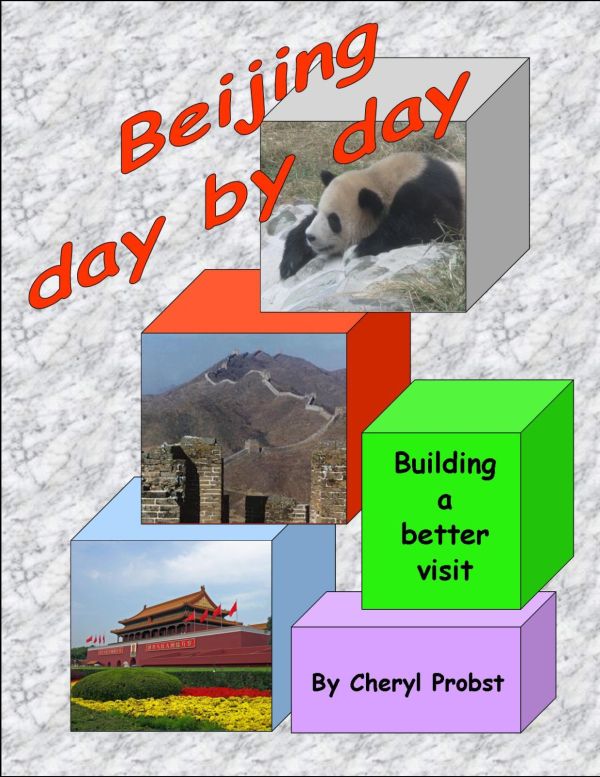
Beijing day by day: Building a better visit is my newest eguide, published just this week on Amazon Kindle.

It contains seven suggested itineraries on how to allocate your time in Beijing. Actually, you can fill more than seven days, since one itinerary suggests three day trips, each of which requires a full day to do, outside of Beijing. Plus another Beijing itinerary can be broken down into two days for visitors who have extra time and interest.

The itineraries are not in any special order of importance. I've tried to group them by geographic location, to cut down on travel time spent in Beijing traffic. I like to use public transportation in Beijing, because it's cheap and efficient, so I've listed subway stops and bus numbers to get to each site. I also say when it's more efficient to take taxis, but there's no reason people can't take taxis to all the sites. Open hours at the attractions also are included.

The book is targeted for independent travelers who need assistance planning their itineraries as well as travelers who are taking advantage of Beijing's new visa-free status of 72 hours as a stopover on international flights.

Beijing day by day retails for $2.99 in the Amazon Kindle store. A list of my other guidebooks and podcasts can be found on my Amazon author page. The list includes DIY Beijing, Parents Guide to Beijing, and Cuandixia: an ancient mountain village.

Are you going to China?

If China is in your travel plans, be sure to check out my website, Cheryl's China. Feel free to email me if you have any questions about travel in China.

Thursday, November 1, 2012

Beijing: a valued city

Fun food in Beijing
I hate to say I told you so, but Lonely Planet has just recognized what I've been saying for years: Beijing is a top city for travel. The guidebook publishers just ranked Beijing as No. 5 on the top 10 cities in the world to visit in 2013.

The article states Beijing is the best value for culture, food and what your money will buy. It further adds, "China is on the cusp of true greatness and one day, people will look back and say it all started here."

Granted, Beijing does have a reputation as a very expensive city. That's because many foreigners think they have to stay at five-star hotels, such as the Peninsula Palace just off Wangfujing Street. I've been in the Palace - wow! - and been awed by the grandeur of the ladies' room. But I wouldn't want to stay there, not when there are so many nice two- and three-star hotels available in neighborhoods with personality throughout the city.

Two years ago, we stayed for two weeks in the Beijing Hutong Culture Inn, a two-star smack in the middle of the city's disappearing hutongs. I was out by 6-7 a.m. every day to explore the hutongs, which are at their most vibrant at that time as the Chinese stop at little hole-in-the-wall restaurants for breakfast before dropping their kids off at school or daycare and heading to work for the day.

And the food. The capital is filled with restaurants that serve wonderful food. Many foreigners eat only at their hotels or restaurants they're taken to on tours. The food there is expensive and most likely has been sanitized for Western tastes. It is far better to eat at neighborhood restaurants like the Chinese eat at, if you want to taste the real China.

Smaller restaurants may not have menus in English, but it's OK to point at what others are eating when you're ready to order. After the 2008 Olympics, more restaurants are using menus with pictures of the dishes; some may even have a loose translation in English. One thing for sure, eating in a neighborhood restaurant is certainly an adventure!

Beijing oozes culture, no matter how you define the word. If art is your bag, you'll want to visit the National Art Gallery (Meishuguan) that not only prominently displays Chinese artists but also the works of internationally famous artists. Families will enjoy the 798 art district in northeastern Beijing, where a whole electric plant has been converted into artists' studios, shops and restaurants. Even if you only stroll through the district, the outdoor sculptures alone make the trip worthwhile.

Concerts, theatre, handicraft markets and more all make Beijing a culture hot spot. Add to this looks into the past, at such attractions as the Forbidden City and Summer Palace.

Yes, Beijing is a valued city. What makes Beijing a valued city for you? Share your insight in the comments below.

Are you going to China?

If China is in your travel plans, check out Cheryl's China or email me if you have questions about traveling in the Middle Kingdom.


Friday, February 24, 2012

Introducing the new Cheryl's China


Introducing the new Cheryl's China website.

My new website is finally up! It's been about a year in the making, due to several disastrous starts and other problems encountered along the way. You don't want to know about them. Honest. Trust me on this.

The new Cheryl's China represents a major overhaul of the website I originally put up on 1999, which was only 10 pages. The last Cheryl's China was 14 pages, but was two separate websites cobbled together, because the software I designed my site in only allowed 10 pages per site. It also was very time-consuming to update, so it didn't get updated very often.

All this changed with the new Cheryl's China. It's about 40 pages now. Since it is easier to update this site, I plan to add new pages periodically, so you'll want to check back often.

This website is heavy on Beijing travel. I lived in the Chinese capital for two years and that is where we most often go when we return to China. However, I've been to a lot of other places in China, and I'll be adding information on them as time passes.

The section on Chinese food is getting rave reviews from viewers so far. I love to take pictures of the food we eat, and it was difficult to pick out my favorite food photos -- I have hundreds of them.

Please take a look at Cheryl's China.

And, remember, if you have questions about traveling in China, especially Beijing, please feel free to email me or leave a comment below.

Sunday, January 1, 2012

Beijing Musuem Pass

A bell at the Big Bell Temple
If you're going to be in Beijing for more than a few days and like off-the-beaten path attractions, as I do, the Beijing Museum Pass could be just what you're looking for.

Major international cities like Seattle and Paris have city passes that are good for one to three days of admissions to a city's major attractions. To get your money's worth, you have to rush around to a lot of museums.

Not so with the Beijing Museum Pass. You've got a whole year to use it. And, unlike the other city passes where each person has to buy one, the Beijing pass is good for free or discounted admissions for one, two or more people.

The 2012 pass covers 115 museums, art galleries and other tourist attractions; you can even use it to go strawberry picking.

The pass only makes sense if you're going to be in Beijing a week or longer, or are making a return visit to the Chinese capital. If you're on your first visit to Beijing, you need to see the major attractions: Forbidden City, Tiananmen Square, Summer Palace, Great Wall, Temple of Heaven, etc. The pass does not cover these major sites. Instead, it covers admissions to lesser known sites, some of which are among my favorites in Beijing, such as the White Dagoba Temple at Beihai Park, the Ancient Bell Museum at the Great Bell Temple, Drum and Bell towers, and Soong Ching Ling House.

Some museums allow free admission for up to two people, others allow half-price admission or similar discounts. The packet also comes with tickets to museums that are free to begin with, but having this ticket means you don't have to stand in line to get the free tickets.

The Beijing Museum Pass for 2012 costs 120 yuan (approximately $19) and, sponsors say, represents a savings of 2,500 yuan (approximately $400)  if you were to visit each museum in the program. Of course, only a tiny percent of people will actually do that.  But two people only have to visit five or six museums for the pass to pay for itself.

The pass, known as bowuguan, can be purchased at post offices in Beijing.

Pair the museum pass with an yikatong, available at subway stations, and you're all set to see the sights of Beijing. This is a pass that allows you to move around on Beijing's subway and bus systems. You don't save any money on subway rides, but do get a slight discount on bus rides. The main benefit to the yikatong is you don't have to stand in line to buy subway tickets or worry about how much bus fare will be -- Beijing buses charge fares based on distance. We've used yikatongs on our last two trips to Beijing, and they are really convenient.

Are you going to China?

If a trip to China is in your travel plans, please check out my website, Cheryl's China, and feel free to email me if you have any questions about travel in China, especially Beijing.


Sunday, May 1, 2011

Wangfujing night food market

Deep-fried grasshopper kebobs
Whenever I return to Beijing, one of the first places I go back to is the Wangfujing night food market. It has an amazing array of foods you can snack on. I used to eat there about once a week when I lived in Beijing, and could put together several snack dishes for a dinner that cost the equivalent of $1.

Back then, conditions weren't as sanitary as they are now, but it didn't bother me. Now, every stand has electricity, covered stands and everyone wears the same uniform. It's a lot cleaner, but still a lot of fun even though I don't usually eat there any more. I just like to go see what's the latest, greatest snack.

If you're traveling in Beijing with your kids, they're sure to like this market, located just off Wangfujing, Beijing's famous shopping street. Just about everything imaginable shows up as a kebob: scorpions, seahorses, tiny birds, snakes, crayfish, beetles, silk worms, and even the traditional pork and chicken chunks. A few years ago, a friend tried the deep fried scorpions, and said they tasted like popcorn. I'll take her word for it, I'm not that adventurous of an eater. My motto is look, but don't touch/eat, and take plenty of photos.

You can also get the more traditional jiaozi (dumplings/potstickers), ciao mian (chow mein), bean congee and assorted fruits, to name a few of the food items on display. I visited the night food market when we were in Beijing last fall, and saw a new beverage I hadn't seen before:  large plastic glasses filled with a colored beverage of some sort that were steaming at the top, almost as if someone had dropped a chunk of dry ice in them. They looked beautiful, but I am way of drinking anything that's not bottled when I'm in China.

Are you going to China?

If you're planning a trip to the Middle Kingdom, please visit my website and feel free to email me if you have any questions.


Monday, November 29, 2010

Do you have questions about travel in China?

If so, send 'em my way!

Travel in the Middle Kingdom can seem intimidating because it's such a mysterious, alien culture with customs we aren't familiar with, foods we don't eat, and a language we can't speak or read. Many travelers find the combination too daunting so they sign up for packaged tours where you get a Westernized version of the country.

But independent travel is possible in China, especially if you've done your homework and have some idea of what to expect. That's where I can help you. If you have questions about traveling in China, especially Beijing, I can help you or, if not, tell you where you can find the help you need. One of the things I like to do is help people make sure their trips to China are a success.  China is one of my favorite countries (good thing, because I lived there two years and have made about a dozen other trips there!) and it's important to me that people like China.

People email me questions frequently -- maybe I'll start an FAQ on my China travel website of the questions I get asked a lot. Sometimes people will send me several emails, such as one lady from Texas. We emailed frequently for more than a year after her initial question about independent travel versus a tour. She and her husband decided to travel independently. The following is an excerpt of the email I received from her when they got back:
" I wanted to let you know we had a wonderful, marvelous trip and experience in China.  I am so grateful that you gave me the encouragement and confidence I needed to go by ourselves.  I can’t remember how many people we talked to while we were there who told us “how brave” we were for being on our own (and people at home thought we were crazy), but we have never felt safer on any of our travels, even in our own neighborhood at night!  And the lack of being able to verbally communicate wasn’t the barrier I expected.  Travel around the country was no problem at all. "
Emails like this really make me feel good.

So if you have questions about travel in China, email me and I'll do my best to answer them.

Give a Cheryl's Guide for Christmas!

If you hurry, there's still time to order a Cheryl's Guide for the traveler on your Christmas list:
  • Parents Guide to Beijing is filled with Beijing sights and attractions your kids will enjoy.
  • DIY Beijing expands upon the information in Parents Guide but is geared to adults.
  • Motorcycle Museums of the United Kingdom has information about all the museums that I could find in the United Kingdom that contain at least one motorcycle.
More information on the books and how to order them is available from Cheryl's Guides. But you better hurry. The guides are printed and mailed from Singapore, so it could take two to three weeks before they arrive. If you order one and you don't get it by Dec. 23, email me your order confirmation, and I'll send you a stocking stuffer PDF notice to give your traveler.

Monday, October 25, 2010

President Oba-mao

Buying souvenir t-shirts when you're in a foreign country is one of the fun things about traveling internationally. And my husband and I certainly buy our share. But we were surprised during our recent trip to Beijing to find t-shirts sporting the picture of President Barack Obama. He's wearing a Mao cap at an angle that is faintly reminiscent of Che Guevara.

Of course, we bought a bunch of them as gifts for friends, especially those who are anti-Obama. (One friend sends me 6-8 anti-Obama emails each week.)

Unlike in this country, the president appears to have a good image abroad.

On at least two occasions, Obama and his politics were discussed. The first time was when I was taking a cooking class. Besides me, there was a young woman from Singapore, a young couple from the Netherlands, and two middle-aged couples from Australia. When I mentioned that I was not an Obama fan (I am not a fan of any Democrat), these people were aghast and wanted to know why some Americans did not like him. As I explained reasons why some were against him, they strongly defended him and his policies.

The next day, at lunch with two friends I knew from my China Daily days, we again discussed Obama. They could not believe there were many Americans who did not like him or his policies. My husband used as an example that Obama wants to cut benefits to veterans (my husband is one) and how this would affect us financially. They were surprised to learn this and felt maybe the rest of the world was not being told the whole picture.

Going to China?

If you plan to travel to China, especially Beijing, please check out my website. If you have questions about travel in China, please feel free to email me. For Beijing guidebooks written from a different perspective, check out Cheryl's Guides for information on Parents Guide to Beijing and DIY Beijing.

Monday, October 18, 2010

Life in the hutongs

When I lived in Beijing, I spent a lot of time exploring the hutongs on foot and by bicycle. It was a way of life that fascinated me, though I wouldn't want to live like that. While the hutongs are picturesque, most of the homes there don't have indoor toilets, which is why you'll see public toilets on almost every block.

But as Beijing upgrades and modernizes itself, the hutongs are giving way to tree-lined avenues and high-rise office and apartment buildings. There are some hutongs left in central Beijing but just how much longer they'll remain is any one's guess.

One of the things I wanted to do this trip was walk from Dazhalen, south of Tiananmen Square, to Liulichang, a walk through the hutongs I'd taken many times in the past. When we got to Qianman the McDonald's was gone as were all those neat little food stands we used to buy snacks at. They were replaced by a park and a multi-lane boulevard dividing the area. We did not do the planned walk.

With so much going on in Beijing right now, the hutongs remain my lifeline to a bygone era. Two years ago,we stayed at a hotel on Guloudongdajie, not too far from the Drum Tower. The location was great but the hotel was pretty bad. We gave the area another try this time and stayed in the Beijing Hutong Culture Inn which is tucked away in the hutongs around Gulou. It's a budget hotel that was very clean and with friendly staff that spoke good English. At first we weren't particularly fond of it because it was very difficult to find, but after we discovered a good route out of it, we thought it was a great place. I would get up early every morning and spend an hour or so just wandering through the neighborhood, shooting pictures and eating freshly made youtiao -- a greasy, but delicious, fried breakdstick.

If the hutongs are still around the next time we go to Beijing, we'll stay at the Beijing Hutong Culture Inn again. I've reviewed the hotel more in depth here.

Going to China?

If you're planning a trip to China, please check out my website and feel free to email me with any questions you have. If you're looking for guidebooks that show Beijing from a different perspective, check out Cheryl's Guides.

Wednesday, September 15, 2010

The terrible TOEFL!

I'm glad I was born a native English speaker.

It got me out of taking the TOEFL. TOEFL stands for "Testing of English as a Foreign Language." If I'd been born in, say, China, and decided I wanted to attend college in the United States, I'd have to take the TOEFL. The purpose of the test is to see how well foreign students understand the English language. If their writing, listening, reading and speaking skills in English aren't that good, students will likely not succeed in college.

It's a dreaded test for international students. And it's dreaded for a reason: It's hard! A student's TOEFL score can affect the college he'll be admitted to. The higher the TOEFL score, the better the college that will admit him.

And how do I know the TOEFL is hard? Well, for starters, my Chinese friends have told me this. Secondly, one of my recent freelance writing gigs has been doing TOEFL test practice questions. The assignments mostly involved editing an existing passage on various subjects, and then writing additional questions in a pre-set format. Just for the heck of it, I tried to answer the existing questions and missed a few more than I'd care to admit. This was assuming, of course, I could even understand the articles! I sat at my computer thinking that if I, as a college-educated native English speaker had problems, how is someone for whom English is a second language going to get through this test. That may be the $64,000 question!

Academic writing admittedly is a different genre for me. I've spent 40 years as a journalist and writer making my articles simple and easy to understand. Now I have to make them more difficult  One assignment involved inserting tougher vocabulary words in a passage. It was very hard for me to do this as I felt I was ruining a well-written understandable passage by making it significantly harder to understand. I do understand the need to make it harder to read so it will be more in keeping with textbooks the students will use in college. But I am just so darned glad my future doesn't depend on the results of a TOEFL test!

Are you going to China?

If you're going to China, take a look at Cheryl's China about travel in China, particularly Beijing. And for more information about my China travel guides, including DIY Beijing, Parents Guide to Beijing and Cuandixia, check out Cheryl's Guides. If you have questions about travel in China, please feel free to email me.

Thursday, August 5, 2010

Is this imaginative or what!


A news article on Chinese buses caught my eye the other day. It seems the Chinese are developing a super bus that will drive over two lanes of traffic. The bus, which can carry more than a thousand people, is being designed to alleviate rush hour traffic. Construction is supposed to start this fall in Beijing's Mentougou district, a western suburb which doesn't have the traffic that central Beijing has. Hopefully, if it works, the Chinese will expand this futuristic bus system to areas which really need help, like Second and Third Ring Roads.

When I lived in Beijing in the '90s, rush hour traffic wasn't as bad it is today, but still I could get somewhere faster on foot or bicycle. Taxis started imposing traffic jam surcharges; passengers could get zapped the extra fee in as little as two blocks. The surcharges are still in effect. When we were in Beijing two years ago, we didn't feel like walking 15 minutes from the subway station to our hotel, so we hopped a taxi. Forty-five minutes later we made it to our hotel.

The photo above was taken at Deshengmen on Second Ring Road. The buses are waiting to take people to the Great Wall at Badaling.

Beijing has done a lot to improve and update its bus system while still keeping fares reasonable, Buses are bigger and more comfortable. Buses used to break down frequently, and I remember one time while I was biking down Wangfujing, a bus broke down in the middle of an intersection. Passengers got off and pushed it out of the way. Of course, I didn't have my camera with me that day. Darn! But I did have my camera with me the day a bus caught on fire and burned while driving on southeastern Third Ring Road.

This new bus concept intrigues me. I especially like it that the Chinese aren't afraid to think outside the box. One time when I was working at China Daily, I edited a story about air pollution problems in Lanzhou, a major industrial town in western China surrounded by mountains much like Los Angeles is. One proposal to solve the problem was to blow a mountain to smithereens so the polluted air could escape through the new pass. The article did not say anything about implementing tighter air pollution controls on the industries responsible for the poor air quality.

A plug for me

If you're thinking about traveling to China, especially Beijing, please visit my website. Feel free to email me if you have questions about travel to the Middle Kingdom.

Tuesday, June 29, 2010

China for cheap!

I like to plan trips, even if we don't take them. Last night I was tinkering with the idea of going to Beijing for a couple of weeks in the fall. I got to checking airfares and hotels on the list of websites I check when I'm in the planning stages.

I found a deal on Expedia that was really reasonable, in fact the cost of  two weeks in a budget hotel and airfare was just slightly moe than airfare alone. We sometimes  fly out of Portland, Oregon, when we go to China because it's usually so much cheaper the savings more than pays for our gas and airport parking, not to mention the schedule is almost always more convenient.

Anyway, I priced a trip to Beijing from Portland for just over $1,000 which includes round-trip airfare and two weeks in a budget hotel. This is per person double occupancy. This dates I used were departing Nov. 3 and returning Nov. 17. Airfare alone is running about $1,000 per person at that time. The weather will be cool in Beijing, but the cold winter winds shouldn't have started by then. And because it's off-season, the sights should be less crowded. Play around with the dates as well as other reputable online travel agencies to see what turns up; I didn't do this, though I frequently do, and go for the best deal regardless of who has it.

We went to Beijing two years ago, returning in late October and the weather was really nice. Just a little rain on one day. Believe it or not, the Expedia price is almost $300 per person less than what we paid for that trip. That trip was one of the few where I booked airfare and hotel separately -- it turned out to be cheaper that way, especially since I negotiated a discount with the hotel.

If you book a trip to Beijing, you may want to take my mini-guide, DIY Beijing: a guide for the independent traveler, to help you get around the the city. Check out Cheryl's Guides for more of my China guides. If you have questions about travel in China, especially Beijing, please see my website, Cheryl's China, or email me.

The picture
Rubbing the gold knobs on the entrance doors to the Forbidden City is said to bring good luck. Thousands of people do it every day.

The fine print
Because I mentioned Expedia in this blog, the FTC requires me to disclose if I will receive any payment from Expedia for mentioning them. I won't.

Sunday, February 14, 2010

My take on a top 10 list of places to see in China

National Geographic recently posted a top 10 list of places to see in China on their website. Woo hoo! I've been to the first eight. Here's their list and my take on them:

1. Forbidden City: I find this former imperial palace cold and austere, but every time I go I find something different that I hadn't noticed before. And I really love this this picture of the entrance I got on our last trip to Beijing.

2. Tiananmen Square: Across the street from the Forbidden City. It is huge! I like to get off at the Qianmen subway stop at the south end, then walk north to the Forbidden City.

3. Temple of Heaven: This is probably my least favorite place in Beijing. The temple is pretty, but for me, once is enough. I don't take people in my private group tours there either, and no one has complained so far.

4. The Great Wall: The Great Wall is . . . well, uh . . . great! I've probably been a couple of dozen times to eight sites in all. I usually go to Badaling because it's the easiest to get to from Beijing, and it also has the Great Wall Museum, which is pretty cool.

5. Xi'an: I've been to Xi'an twice. I like visiting the Muslim quarter, which is very colorful, and the city wall. My first time in Xi'an, I came across giant concrete statues of a Silk Road caravan. Very neat. Depending on your perspective, Xi'an was either the start or end of the Silk Road in China.

6. Army of the Terra Cotta Warriors: This is another place that's not on my favorites to visit. I've been there twice (once when I was a tour director and it was on the itinerary, so I had no choice). Once was enough. One the way home from my first trip, I detoured to Banpo Neolithic village, and found it more interesting. I shook my head at their version of cave man's dancing. I rather doubt these ancient people wore sequined costumes and danced to disco music while laser lights bounced all around them.

7. Shanghai: I've been to Shanghai several times. The Shanghai Museum is stupendous. We spent 10 days there two years ago, and pretty much only went to see friends. We spent as much time touring sites around Shanghai as we did in Shanghai.

8. Hong Kong Island: I spent almost a week in Hong Kong a few years ago. It is an amazing city, and someday I'll go back. I especially enjoyed a short cruise on a junk through Aberdeen Harbor and a day trip via ferry to Cheung Chau Island.

9. Stone Forest: I've not been there yet. One of these days. . .

10. Lijiang: This is another place I went to visit. Our Shanghai friends went there last year, and got some stupendous photos. I was so envious!

If you're planning a trip to China, especially Beijing, please check out my website. Feel free to email me if you have any questions. And don't forget to check out my books on travel in Beijing; they're available as downloadable ebooks or in print.

Wednesday, January 20, 2010

Saturday in the park

Whenever I hear the old Chicago hit, Saturday in the Park, I always think of Beihai Park in Beijing. It's my very favorite park in the Chinese capital. In fact, the last time I was there it was a Saturday and people were indeed dancing and laughing, plus a host of other things.

We saw people playing badminton, doing tai chi exercises, singing, dancing (both ballroom and traditional flag dances), using a huge brush to write Chinese characters on the sidewalk with water, playing in a chamber orchestra, juggling . . .

No wonder Beihai is the most popular park in Beijing! It's also one of the prettiest. In the spring, the trees blossom out and the park is awash in pink and white blooms. One summer I went to a fireworks display at night. In the winter, the lake freezes over, with people ice skating. In the summer, they rent boats and paddle/pedal around the lake.

Because it's just a short distance west of the Forbidden City, the park was a playground for China's imperial family. It remains a playground today -- for everyone, not just royalty.

The centerpiece of Beihai Park is the Tibetan-style White Dagoba Temple which sits on an island in the middle of the lake. It's a bit of a hike up steep stairs if you enter from the main entrance, but on a clear day the view at the top is worth it. I tell friends just go up the steps slowly, with frequent stops to catch your breath.

I write about Beihai Park in more detail in my books, Parents Guide to Beijing and DIY Beijing.

If you don't visit Beihai when you're in Beijing, you're missing out on a special attraction. Unfortunately, most organized tours don't stop there.

If you have questions about travel in China, please see my website or email me for help.


Monday, October 19, 2009

From guidebooks to papercuts


My guidebooks
  • I was a guest blogger on Travel Writers Exchange on 10/19/2009/. I wrote about how travel writers could self-publish their own guidebooks, something I've been doing since 1996. All my mini-guides have been on China so far, but I have plans to branch out to other places on the globe.

  • Speaking of guidebooks, I am getting really great reviews on the three I published this summer on GuideGecko: DIY Beijing: A guide for the independent traveler, Parents Guide to Beijing: A kid-friendly city, and Cuandixia: An ancient mountian village in China. Cuandixia is an ebook only, but DIY and Parents Guide are available as print books, too. Readers say they like the compact size, which makes it easy to pack around. They also like the directions on how to find things on public transportation.

Suite101

I'm continuing to add to my cache of articles on travel in China on Suite101. Here's some of my recent articles:
  • Chinese vegetables are more than just bean sprouts and snow peas. How about broccoli, potatoes and cabbage? They're on the list, too.

  • I love Chinese papercuts. They're delicate and colorful as pictured above, and don't take up much room in your luggage. Inexpensive, too, which means they make ideal gifts.

  • Chinese trains provide efficient transportation around this huge country. I especially like traveling hard-sleeper as it provides a chance to meet average Chinese.

  • A visit to Wanping takes you away from the hustle and bustle of central Beijing to a quiet suburb. Wanping is home to the Marco Polo Bridge (Luguoqiao) where Japan fired the first shots in a war against China in 1937. A museum about this war also is located in Wanping. These aren't considered major tourist sites but are well worth the visit.

  • Tanzhesi is Beijing's oldest temple located about 45k from central Beijing. It also makes a nice day trip.
If you have questions about travel in Beijing, email me. For additional information about travel in China, please check out my website, which I recently updated.

Monday, July 6, 2009

Parents Guide to Beijing

After much anguish and pain, (almost as if I were giving birth to a real baby), my Parents Guide to Beijing is for sale as an ebook on GuideGecko.com.

Getting to this point wasn't easy. The book practically wrote itself, but then there was the design to do. Everything went well, up until it came time to PDF the book. That's where the real pain began. It is best left unsaid what I went through in this process. But it's done. Finally.

The ebook got its start as a podcast, Beijing for kids, that I did for VisualTravelTours.com. (They specialize in tours which are downloadable to mobile devices while you're on the scene.) It was a really fun tour to write, but I had so much information left over when I finished it, it begged for a book. So I kept on writing, and Parents Guide to Beijing is the result.

The name may be a misnomer, because it's about things that kids of all ages (even those in their 80s!) can do in Beijing, Beijing is such a kid-friendly city that even if you don't know the language, you can still have a good time. The book includes some very common phrases and numbers in Mandarin. I've given phonetic pronunciations and if you or your kids are anywhere in the ballpark with them, the Chinese will compliment you on your speaking skills.

The ebook takes in major sites to see, such as the Great Wall, as well as mentions kid-friendly things to do at them. There are sections on restroom tips and how to eat kao ya, as Peking Duck is called in Beijing.

The picture here is on the book's cover. It's one of many playful statues outside the Gulou ditie (subway station) on Second Ring Road. I really love those whimsical statues!

Parents Guide to Beijing is only available in ebook form now. As soon as I work out some more bugs, it will be available as a print book also.

Please see my website for more information about travel in China, especially Beijing.